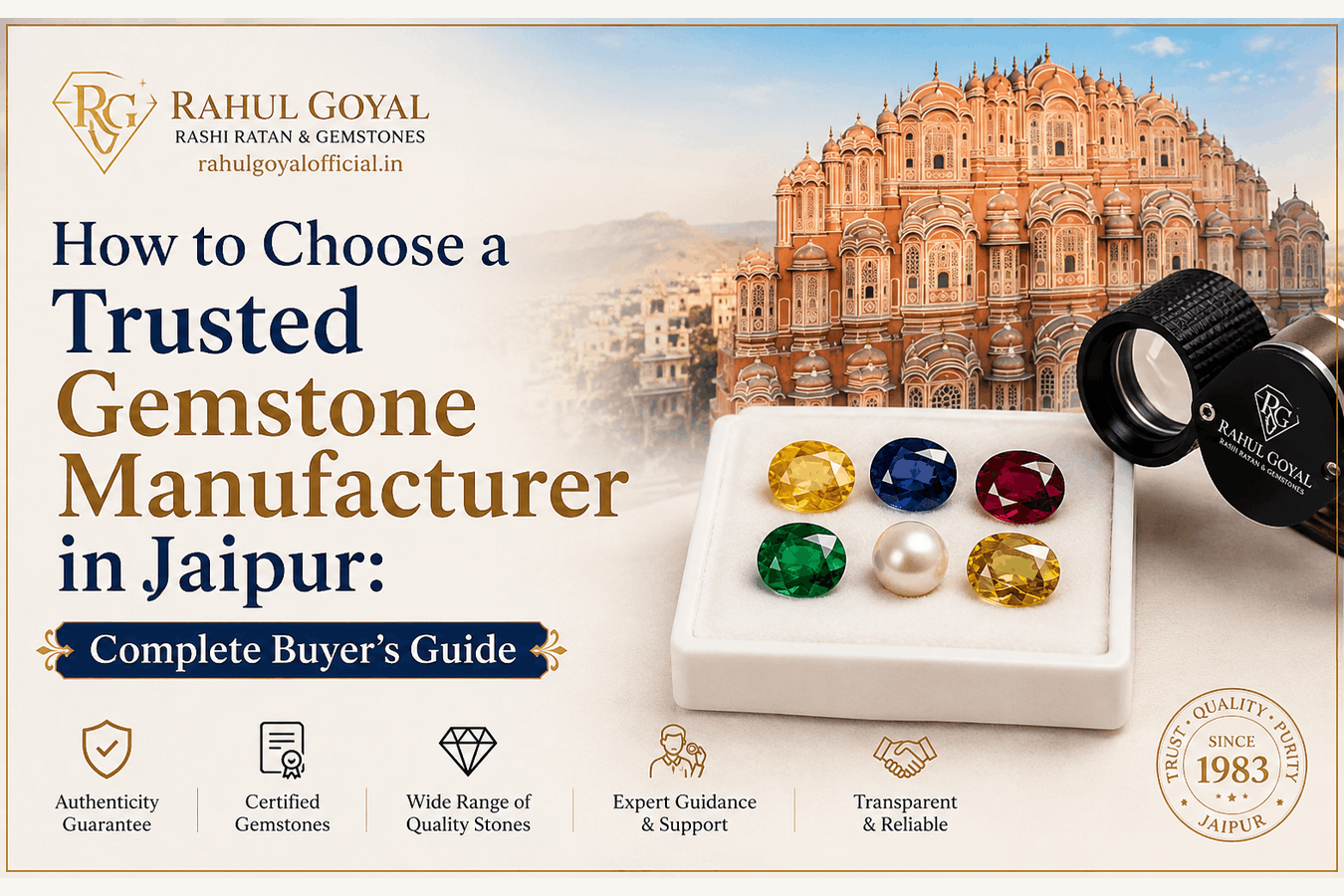
How to Choose a Trusted Gemstone Manufacturer in Jaipur Complete Buyer’s Guide
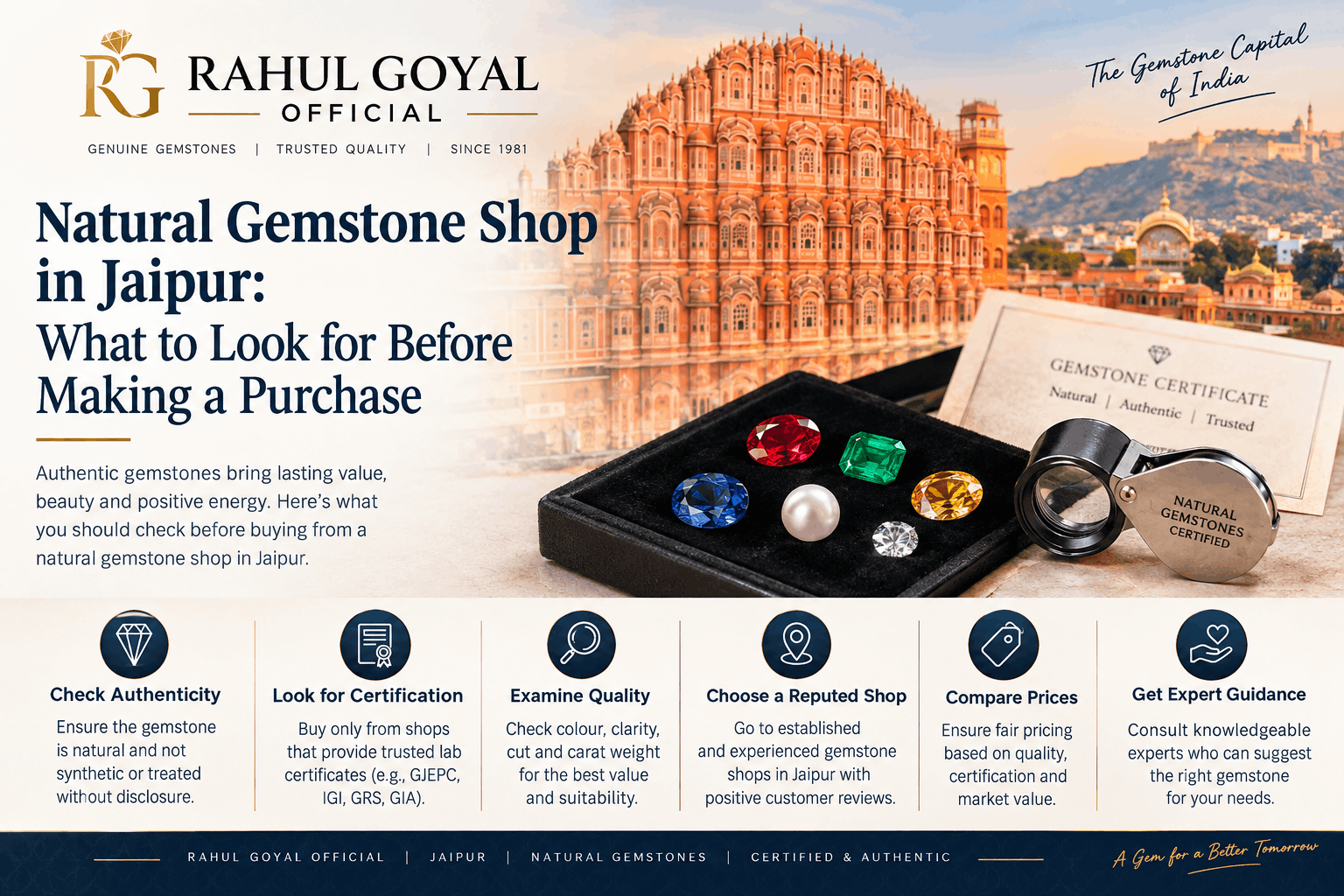
Jaipur has its own reputation for gemstone cutting, polishing, trading and jewel...
By admin
Buying a gemstone in Jaipur can be confusing, especially when similar looking stones are offered at very different prices.
One shop may focus on colour and clarity, another may talk about origin, while someone else may simply say the stone is “100% natural and certified.” None of these statements, on its own, tells you enough about what you are buying.
A natural gemstone can be treated. Two stones of the same weight can differ considerably in quality. Even a genuine gemmological laboratory report is useful only when it belongs to the exact stone being offered.
So, if you are looking for a natural gemstone shop in Jaipur, don't choose only by price, photographs or impressive claims. Look at the stone, its documentation and how clearly the seller answers your questions.
Before making a purchase, check:
You don't need to be a gemstone expert to ask these questions.
If the answer to everything is simply, “Don't worry, sir, it's 100% original,” ask for something more specific.
Jaipur has a long association with coloured gemstones and jewellery. The city has dealers, cutters, polishers, wholesalers, retailers and jewellery workshops working across different parts of the trade.
For buyers looking for natural gemstones in Jaipur, this means more choice. You may be able to compare different qualities, sizes and cuts of Ruby, Emerald, Blue Sapphire, Yellow Sapphire and many other stones without depending on a single seller.
But a Jaipur address doesn't guarantee gemstone quality.
One shop may sell stones cut elsewhere. Another may process stones itself. Some businesses focus on wholesale supply, while others mainly serve individual customers.
None of that is necessarily a problem. What matters is whether the seller honestly explains what it does and accurately describes the gemstone being sold.
Rather than asking only:
“Is this a Jaipur gemstone?”
ask:
“What exactly is this seller offering, and can the important details of the gemstone be verified?”
That's a much better place to start.
The word natural gemstone often creates more confidence than it should.
A buyer asks whether the gemstone is natural, hears “yes” and assumes the question has been settled.
But a natural gemstone may still have undergone treatment.
There is also a difference between a synthetic gemstone and an imitation. A synthetic gemstone is laboratory created as a counterpart to a naturally occurring gemstone. An imitation is another material used because it resembles the gemstone.
Keep these distinctions in mind:
Instead of asking only, “Is this natural?” ask:
“Is this gemstone natural, and is any treatment known or stated in its report?”
That gives you far more useful information and makes it easier to understand exactly what you are paying for.
Colour is usually the first thing people notice. A rich green Emerald or deep Blue Sapphire can look impressive under showroom lighting.
But colour isn't enough to compare gemstones.
Check the:
Measurements are particularly useful. Two gemstones can have similar carat weights but look different in size because their proportions and cuts differ.
Lighting matters too. If you're shopping in person, look at the gemstone under more than one lighting condition where possible.
When buying a natural gemstone online, ask for a recent video of the exact stone, not just a catalogue image. For a costly purchase, you can also ask whether the seller can show the stone, weight, dimensions and report during a live video call.
This is particularly useful when you cannot inspect the gemstone personally before payment.
Don't stop at the word “certified.”
Ask to see the actual gemstone certificate or gemmological laboratory report for a valuable gemstone.
Depending on the report, it may contain:
Then compare the report with the stone.
Does the weight match? Are the dimensions and shape consistent? If a photograph appears on the report, does it correspond with the gemstone?
Where the issuing laboratory provides an official verification facility, check the report number there as well.
A gemmological laboratory report provides information about the gemstone within the scope of the laboratory's examination. It doesn't automatically prove that the asking price is fair or that the seller is trustworthy.
Think of gemstone certification as one part of your verification, not the entire buying decision.
Some buyers hear “treated” and immediately think “fake.”
That's too simple.
A treated gemstone may still be a natural gemstone. This is why treatment and natural origin should be discussed separately.
Ask:
“Has any treatment been detected or disclosed for this stone?”
For an expensive purchase, compare the seller's answer with the available laboratory report.
What you're looking for is consistency. The product description, salesperson, report and invoice shouldn't give conflicting information about the same gemstone.
Gemstone treatment can also matter when comparing prices. Two natural stones of similar weight may not be directly comparable if their treatments and other characteristics are different.
Knowing this before paying makes it easier to understand why two apparently similar stones may have different prices.
Imagine one shop offers an Emerald for ₹20,000 while another offers a similar-looking one for ₹8,000.
The second stone isn't automatically a bargain.
First find out whether you are actually comparing similar gemstones.
Look at:
Then ask:
“What makes this stone more expensive than the other one?”
A knowledgeable seller should be able to explain the difference in terms of the gemstone itself.
The same rule applies to expensive stones. A higher price doesn't automatically mean higher quality.
Terms such as “premium,” “top quality” or “best stone” aren't particularly useful unless the seller can explain what makes the gemstone different.
Natural gemstone prices can vary considerably, so compare the characteristics of the stones before comparing their price tags.
Jaipur has manufacturers, cutters, wholesalers, retailers and online gemstone sellers.
Being one type of seller isn't automatically better than being another.
If a business describes itself as a gemstone manufacturer in Jaipur, ask what work it actually performs. Does it cut and polish gemstones? Which processes are completed in-house and which, if any, are handled elsewhere?
If you're buying from a retailer, focus on whether the retailer accurately describes the gemstone and provides appropriate documentation.
Also check basic business information, particularly for a valuable purchase:
Transparency matters more than the word “manufacturer” or “retailer.”
You should know who is taking your payment and who will be responsible if there is a problem after the purchase.
Reviews can help you shortlist a gemstone shop in Jaipur, but don't let ratings choose the stone for you.
A well-reviewed shop can still sell gemstones across different qualities and price ranges.
Look at reviews for patterns. Do customers mention accurate product descriptions? How does the seller respond to problems? Are there repeated complaints about returns or differences between what was shown and delivered?
Then evaluate the exact gemstone you intend to buy.
Its specifications and documentation tell you more about your purchase than marketing phrases such as:
Specific information is more useful than impressive adjectives.
A seller's reputation can help you decide whom to speak with. The actual gemstone should help you decide what to buy.
Return conditions become especially important when you buy natural gemstones online.
Before paying, find out:
For an expensive purchase, keep a copy of the invoice, gemstone details, gemstone certificate and applicable return terms.
It's much easier to understand the gemstone return policy before payment than after a disagreement begins.
This is also why buyers should avoid making a high-value purchase purely through an informal conversation without checking the written terms.
One advantage of visiting a natural gemstone shop in Jaipur is the possibility of seeing several stones side by side.
Use it.
Instead of saying:
“Show me your best Emerald.”
try:
“Show me three natural Emeralds around this weight and budget, and explain why their prices are different.”
One may have a colour you prefer. Another may appear cleaner. Their dimensions, treatments or reports may differ even when the carat weights are similar.
Pay attention to how the seller explains those differences.
The goal isn't necessarily to choose the cheapest or most expensive option. It's to understand what changes from one gemstone to another and decide which characteristics matter to you.
Side-by-side comparison can often tell you more than looking at dozens of unrelated product photographs online.
Many people looking for natural gemstones in Jaipur are buying Ruby, Emerald, Yellow Sapphire, Blue Sapphire or another Rashi Ratan for astrological reasons.
In that case, separate two questions:
Which gemstone has been recommended for me?
and
Is the physical gemstone I'm buying what the seller claims it is?
These aren't the same question.
An astrologer may recommend an astrological gemstone according to the system being followed. A gemmological laboratory examines characteristics of the physical stone.
Be cautious of sellers promising guaranteed wealth, marriage, career success or other fixed outcomes simply from wearing a gemstone.
If you're buying a Rashi Ratan for astrological purposes, decide on the gemstone according to the guidance you follow, then verify the actual stone just as carefully as you would any other valuable purchase.
A gemstone certificate cannot determine which gemstone is suitable for your Kundli.
Before making a significant purchase, consider asking:
The seller doesn't need to give you a long technical explanation. You simply need clear and consistent answers.
Before paying, confirm that:
If something important is still unclear, ask before paying.
Finding a natural gemstone shop in Jaipur isn't difficult. Choosing the right gemstone requires more attention.
Don't make the decision only because a stone looks beautiful under showroom lights. Don't stop at the word “natural,” and don't assume that “certified” answers every question.
Check what the gemstone actually is. Ask about gemstone treatment. Compare its weight, measurements and other relevant characteristics. Verify the gemmological laboratory report when appropriate, and understand the invoice and return conditions.
Most importantly, compare stones rather than marketing claims.
If two gemstones look similar but have very different prices, ask the seller to explain why.
A clear answer can tell you far more than the words “premium quality.”
Look for clear gemstone specifications, treatment disclosure, appropriate laboratory documentation and transparent business information. For a valuable purchase, also check the invoice and return conditions before paying.
Don't rely only on photographs or visual appearance. For a valuable natural gemstone, ask for an appropriate independent gemmological laboratory report and confirm that it belongs to the exact stone being sold.
No. A natural gemstone can still have undergone treatment. Ask about natural or synthetic status and gemstone treatment separately.
Not automatically. A natural gemstone may be treated. The important issue for a buyer is accurate identification and disclosure of relevant treatments.
Not every low-value purchase requires the same documentation. For a valuable gemstone, an appropriate independent gemstone certificate or laboratory report can provide useful information about the stone's identity and tested characteristics.
Weight is only one factor. Colour, clarity, cut, dimensions, treatment, rarity and other gemstone-specific characteristics can affect natural gemstone prices, which is why similar-looking stones may be offered at different prices.
Yes. If you buy natural gemstones online, ask for the exact stone's specifications, recent photographs or video, relevant laboratory documentation, invoice details and written return conditions before making a valuable purchase.
No. A gemstone certificate provides information about the physical gemstone. Choosing a gemstone according to Kundli is a separate question based on the astrological system being followed.
We Satisfied more than 700 Customers
Jaipur has its own reputation for gemstone cutting, polishing, trading and jewel...
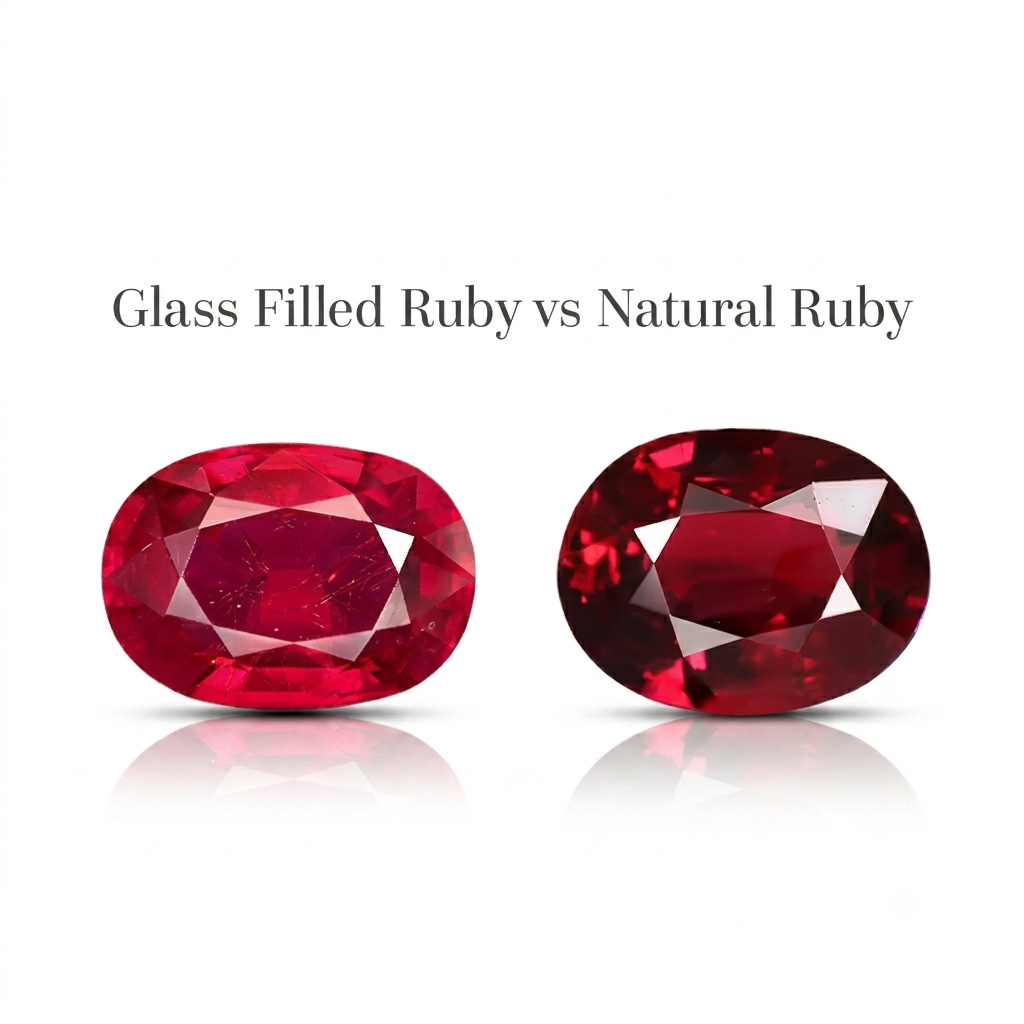
Ruby's one of the most sought after gemstones out there and in Vedic astrolo...
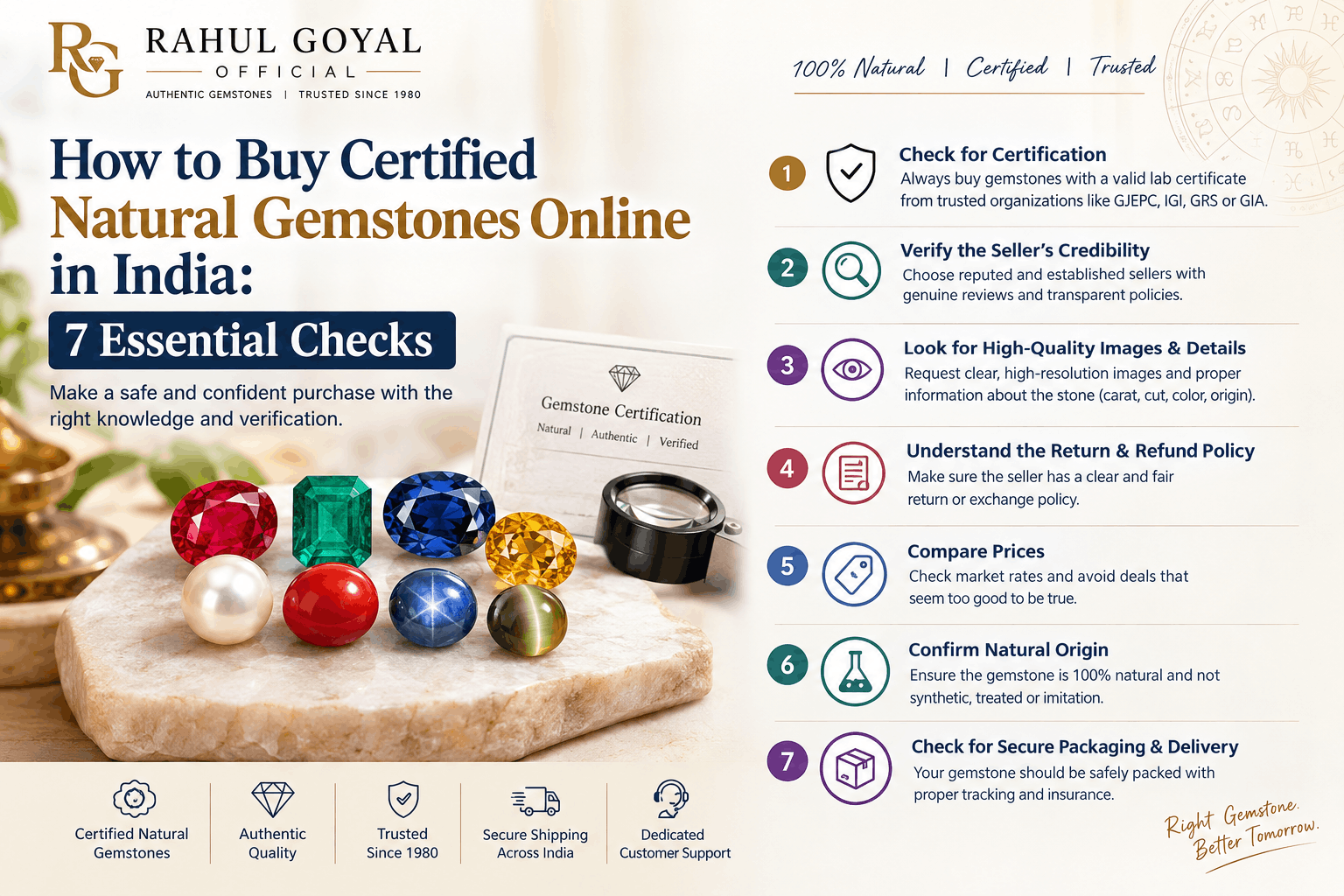
Quick Answer Buying a Certified Natural Gemstone online in India requires mor...
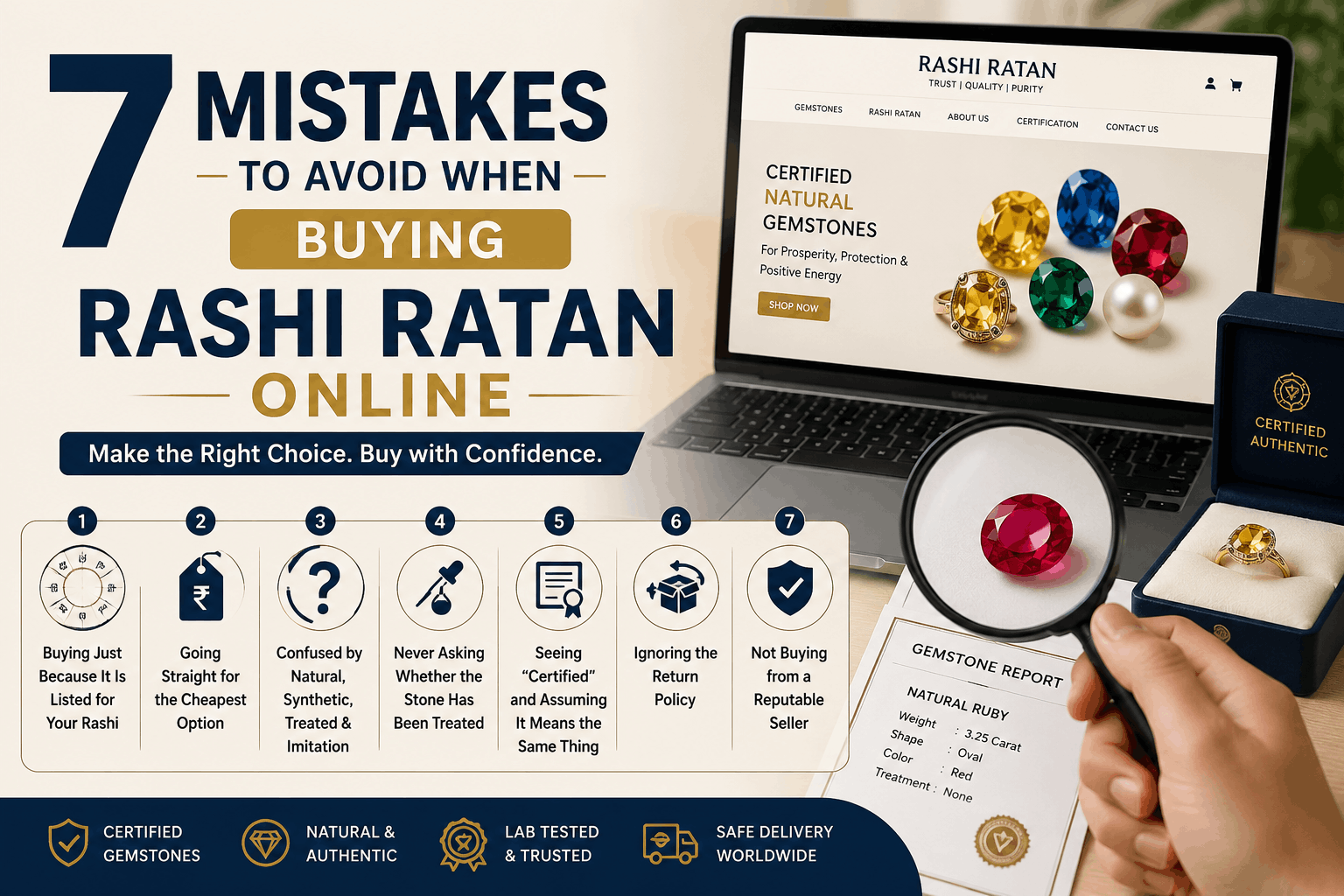
Shopping for a Rashi Ratan online can get confusing pretty quickly. Search for o...
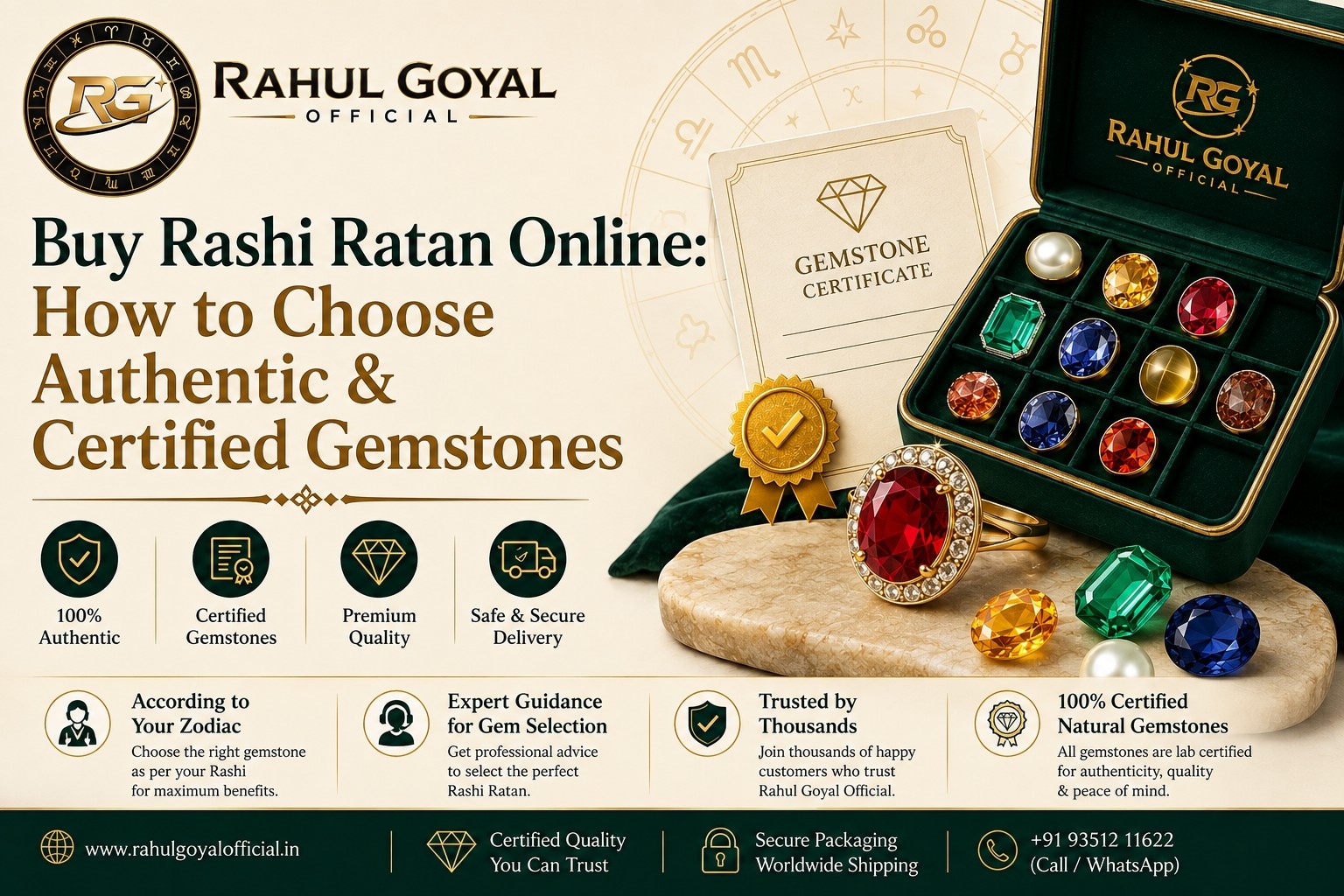
The process of selecting the perfect gemstone involves more than just choosing a...
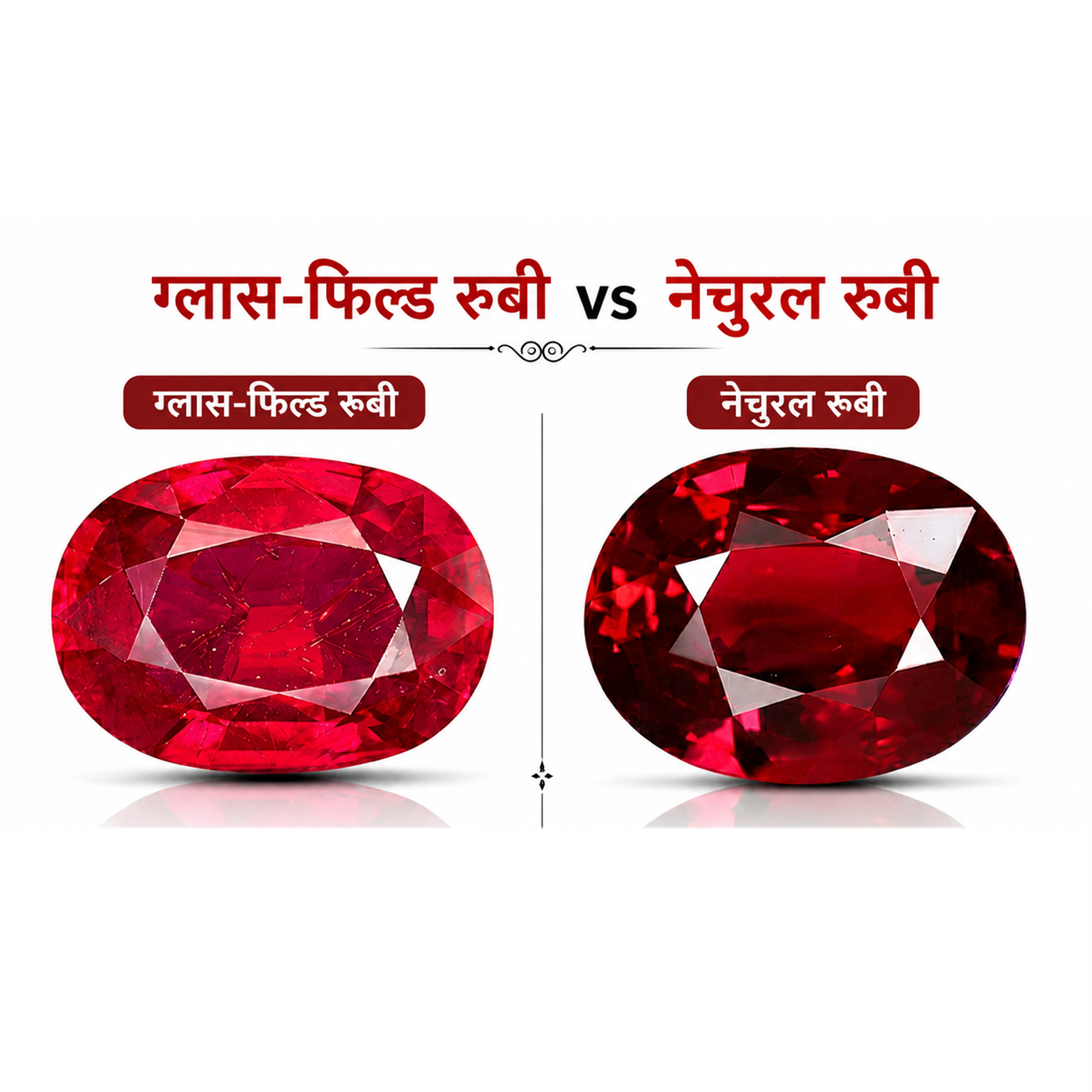
Natural Ruby vs Glass-Filled Ruby: पहचान कैसे करें और कौन-सा रूबी खरीदना चाहिए?...
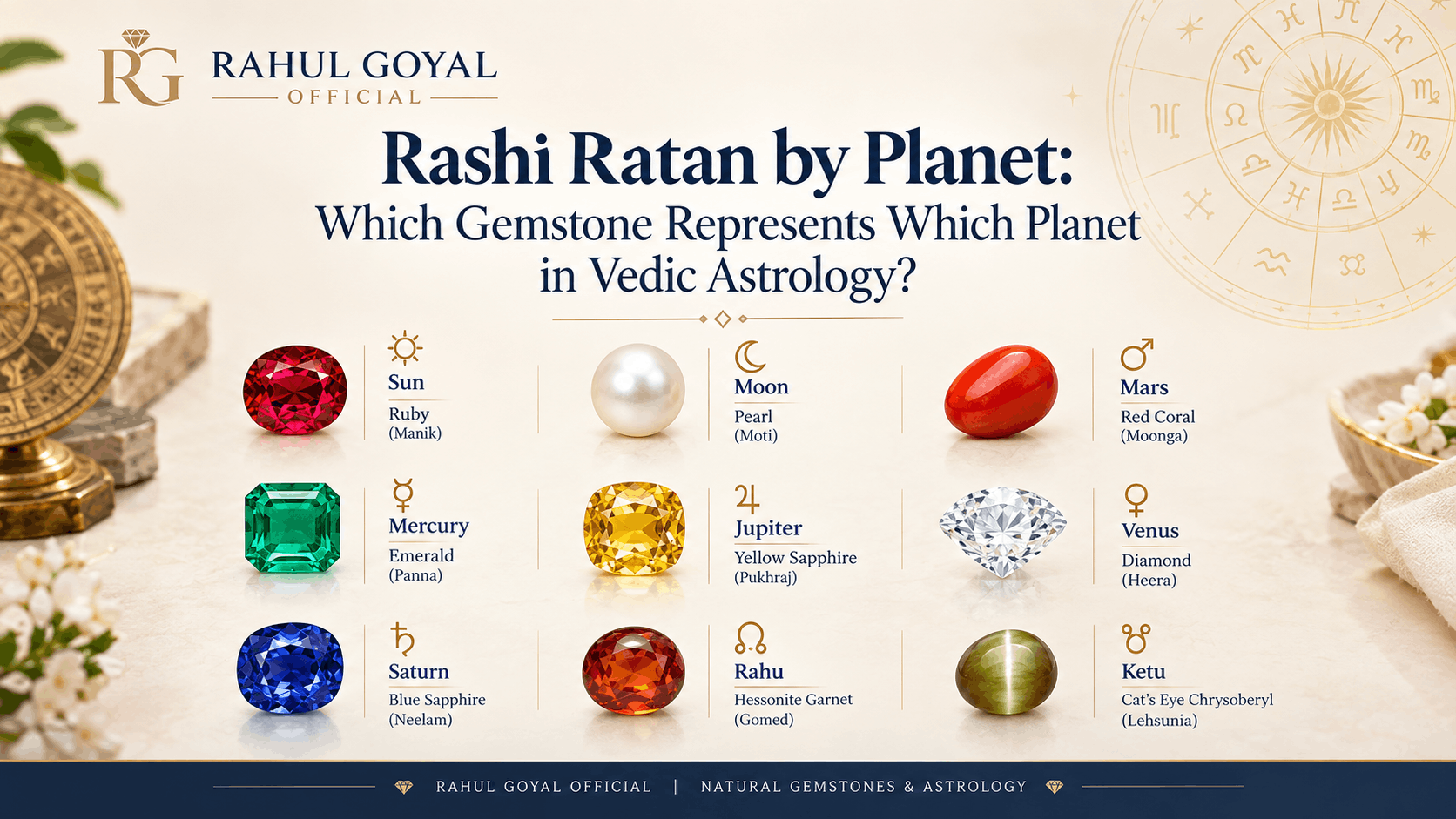
The traditional Rashi Ratan by planet, or Navagraha gemstones, list connects the...
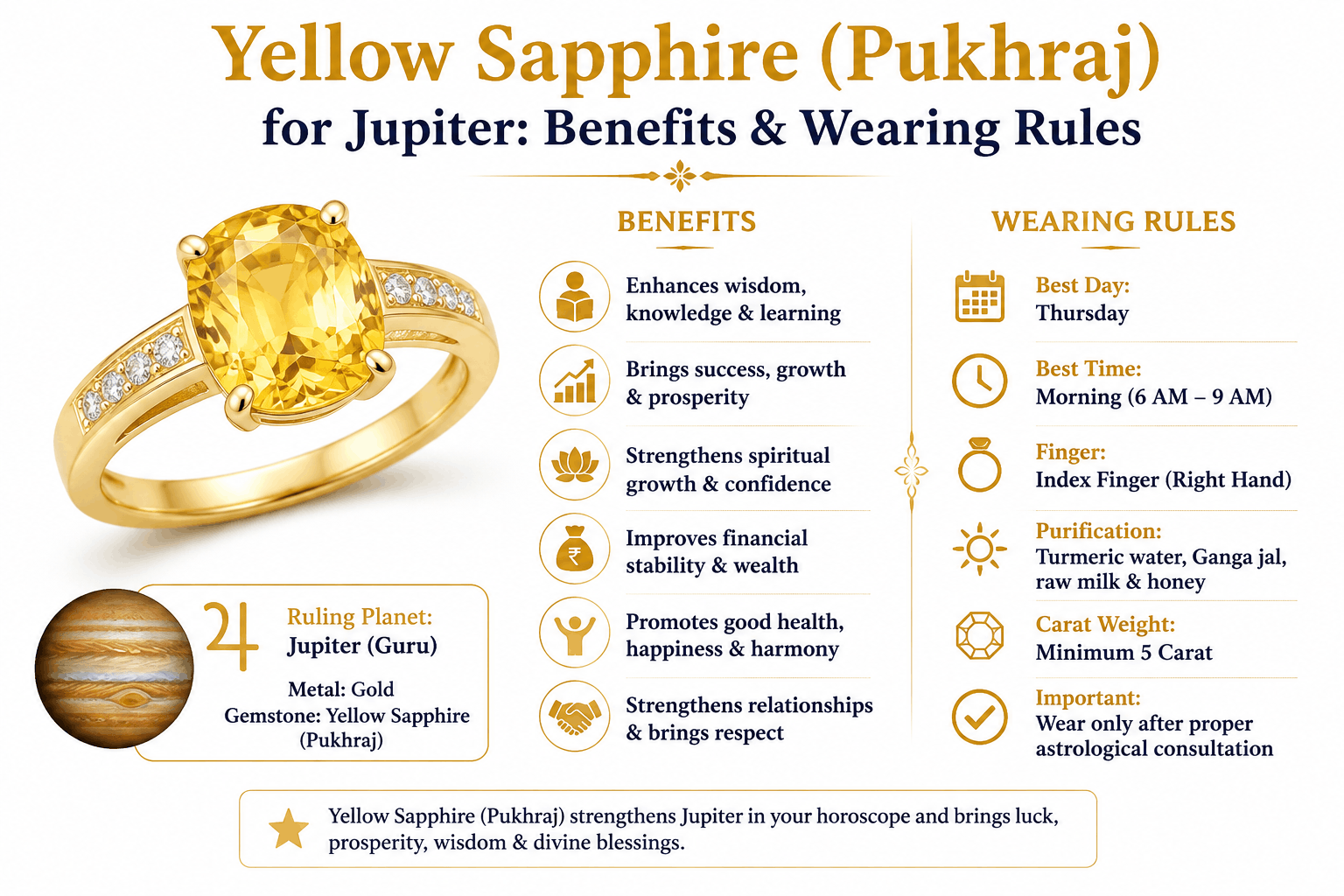
Yellow Sapphire popularly known as Pukhraj Ratna is one of the most auspicious g...
Discover our handcrafted silver treasures and add something beautiful.
Explore Collections