How to Buy Certified Natural Gemstones Online in India 7 Essential Checks
Quick Answer Buying a Certified Natural Gemstone online in India requires mor...
By Rahul Goyal | 9th October 2026
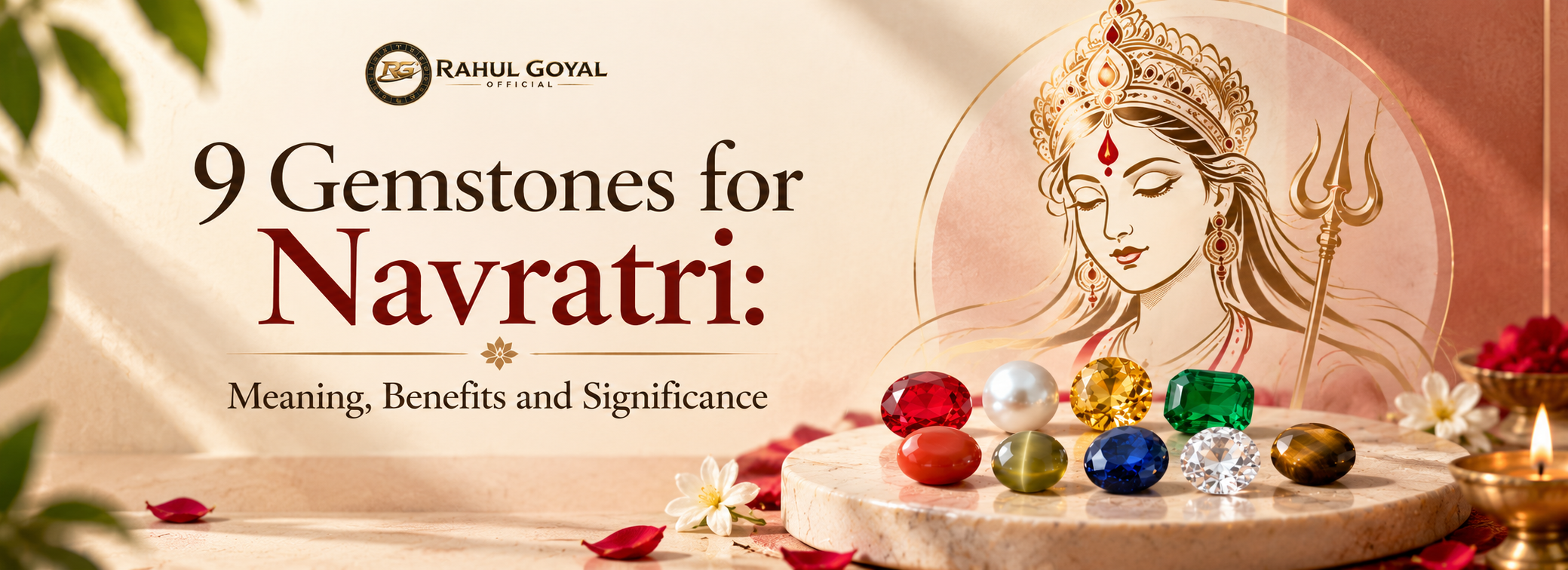
The nine gemstones associated with Navratna in Vedic astrology are Ruby (Manik), Pearl (Moti), Red Coral (Moonga), Emerald (Panna), Yellow Sapphire (Pukhraj), Diamond (Heera), Blue Sapphire (Neelam), Hessonite Garnet (Gomed) and Cat's Eye (Lehsunia). Each gemstone is traditionally associated with one of nine planetary influences and symbolises qualities such as confidence, peace, courage, wisdom and spiritual insight. However, Navratna gemstones are not universally assigned to the nine days of Navratri, which celebrate the nine forms of Goddess Durga.
Navratri is an important Hindu festival dedicated to the worship of Goddess Durga and her nine forms, collectively known as Navadurga. Each form represents different qualities, including courage, devotion, compassion, wisdom and spiritual strength. Along with prayers and traditional rituals, Navratri offers an opportunity to explore the rich cultural heritage of Indian gemstones.
In Vedic astrology, nine gemstones are collectively known as Navratna. Each gemstone has its own appearance, planetary association and traditional meaning. Understanding the 9 gemstones for Navratri helps explain their significance in Indian culture, jewellery traditions and astrological beliefs.
The nine Navratna gemstones are traditionally associated with the Sun, Moon, Mars, Mercury, Jupiter, Venus, Saturn, Rahu and Ketu. The following table summarises their traditional associations.
|
|
|
|
|
|
|
|
|
|
|
|
|
|
|
|
|
|
|
|
|
|
|
|
|
|
|
|
|
|
|
|
|
|
|
|
|
|
|
|
|
|
|
|
|
|
|
|
|
|
These associations come from traditional astrological beliefs and should not be interpreted as scientifically established effects.
Meaning, Benefits and Significance of the Nine Gemstones
Ruby is a red variety of corundum associated with the Sun in Vedic astrology. Traditionally, it represents vitality, leadership, authority, and self-confidence. Its rich red colour has long been associated with strength and royalty.
When researching a Buy Certified Ruby (Manik) Gemstone option, it is important to understand the difference between natural, synthetic, and treated Ruby. Colour, clarity, cut, and reliable gemological documentation help buyers evaluate a stone's identity and quality.
Pearl is associated with the Moon and traditionally symbolises peace, purity and emotional balance. Unlike most gemstones, pearls form inside certain molluscs. Natural pearls, cultured pearls and imitation pearls differ in their origins, characteristics and market values.
Pearl's traditional symbolism makes it an interesting part of Indian jewellery heritage, particularly for those who appreciate its soft lustre and timeless appearance.
Red Coral is an organic gemstone material traditionally associated with Mars. In Vedic astrology, Mars represents courage, determination, energy and action. Red Coral is recognised for its red or reddish-orange colour and its historical use in traditional jewellery.
For anyone researching how to Buy Certified Red Coral (Moonga) Gemstone Online, checking the material's authenticity, responsible sourcing, quality and available documentation is important. Buyers should also distinguish genuine coral from imitation materials.
Emerald is a green variety of beryl associated with Mercury. Traditionally, it represents intelligence, communication, learning and analytical thinking. Its vibrant green colour makes it a distinctive gemstone in fine jewellery.
When exploring Emerald (Panna Stone) Online, buyers should understand that natural Emeralds commonly contain inclusions and may undergo clarity-enhancing treatments. Reviewing treatment disclosures and appropriate gemological reports helps provide a clearer understanding of the stone's characteristics.
Yellow Sapphire is a variety of corundum associated with Jupiter. Traditionally, Jupiter represents wisdom, education, guidance and prosperity. Yellow Sapphire is valued for its yellow to golden hues and its importance in Vedic astrological traditions.
Its cultural significance is distinct from its physical properties, which determine its appearance, durability and suitability for jewellery.
Diamond is a crystalline form of carbon associated with Venus in Vedic astrology. It traditionally symbolises beauty, luxury, refinement and artistic expression. Its brilliance and durability have made it one of the most recognised gemstones across cultures.
When evaluating a Diamond, the four Cs cut, colour, clarity, and carat weight help explain differences in quality and value. It is also important to distinguish natural Diamonds from laboratory-grown Diamonds and imitations.
Blue Sapphire is a blue variety of corundum associated with Saturn. Traditionally, it represents discipline, patience, responsibility, and perseverance. A precious blue sapphire gemstone can range from light blue to deep, saturated blue, depending on its characteristics.
Colour, clarity, cut, origin, and treatment history can influence a Blue Sapphire's value. These factors are important when assessing gemstone quality, regardless of whether the stone is being considered for jewellery or traditional astrological purposes.
Hessonite Garnet, commonly known as Gomed, is associated with Rahu. Traditional astrological interpretations connect Rahu with ambition, unconventional thinking, and transformation. Hessonite commonly displays honey-brown, cinnamon or reddish-orange colours.
When researching a Buy Precious Hessonite (Gomed) Gemstone option, buyers should consider the gemstone's identity, colour, clarity, treatments and available authenticity documentation rather than relying on claims of guaranteed astrological results.
Cat's Eye is associated with Ketu and traditionally represents introspection, spiritual reflection and detachment. Natural chrysoberyl cat's eye is particularly valued for its distinctive band of reflected light, known as chatoyancy, which resembles a cat's eye.
The sharpness and position of this optical effect, together with the gemstone's body colour and overall quality, can influence its appearance and value. The term Cat's Eye is also used for other gemstone materials, so identifying the exact mineral is important.
Navratri and Navratna are two different concepts within Indian traditions. Navratri celebrates the nine forms of Goddess Durga, collectively known as Navadurga, while Navratna refers to nine gemstones traditionally associated with planetary influences in Vedic astrology.
Although both concepts involve the number nine, there is no universally accepted rule assigning each Navratna gemstone to a particular day or form of Goddess Durga. Any such pairing should be understood as a specific cultural interpretation rather than a universal religious requirement.
Navratri colours are another related but separate tradition. Many communities associate particular colours with different days of the festival, but these colour traditions should not be confused with the nine planetary gemstones.
Devotees can celebrate Navratri through prayers, fasting, traditional clothing and personal customs without needing to wear a particular gemstone.
When choosing a gemstone, consider its identity, quality, intended use and budget. Colour, clarity, cut and carat weight influence the appearance and value of many gemstones, although the relevant quality factors differ by gemstone type.
Before purchasing, check whether the stone is natural, synthetic, treated or an imitation. For valuable gemstones, a report from a reputable gemological laboratory can help establish identity and disclose relevant treatments.
People considering gemstones for astrological purposes may consult a knowledgeable practitioner. Traditional astrological benefits are based on cultural beliefs and have not been scientifically established as guaranteed outcomes.
The nine Navratna gemstones represent an important part of Indian gemstone heritage and Vedic astrological traditions. From Ruby's association with confidence to Pearl's symbolism of peace and Cat's Eye's connection with spiritual reflection, each gemstone has its own traditional meaning and distinctive characteristics.
Understanding the meaning, benefits and significance of the 9 gemstones for Navratri provides a clearer picture of how gemstones are interpreted in Indian culture. By understanding the difference between Navratna and Navadurga and distinguishing traditional beliefs from scientific evidence, readers can appreciate the cultural, historical and aesthetic significance of these gemstones with greater clarity.
Ans: The nine gemstones are Ruby, Pearl, Red Coral, Emerald, Yellow Sapphire, Diamond, Blue Sapphire, Hessonite Garnet and Cat's Eye. They are traditionally associated with the Sun, Moon, Mars, Mercury, Jupiter, Venus, Saturn, Rahu and Ketu, respectively.
Ans: There is no universally accepted mapping that assigns each Navratna gemstone to a specific day of Navratri. The nine planetary gemstones and the nine forms of Goddess Durga belong to different traditions.
Ans: The astrological effects traditionally attributed to gemstones have not been established by reliable scientific evidence. Nevertheless, gemstones hold cultural, spiritual, aesthetic and personal significance for many people.
Ans: Check the gemstone's identity, quality, treatment history and seller disclosures. For valuable stones, consider an appropriate gemological report and review the seller's return policy.

Need guidance or a personal consultation? Share your query with our team and we will get back to you with the right advice and support.
Contact Us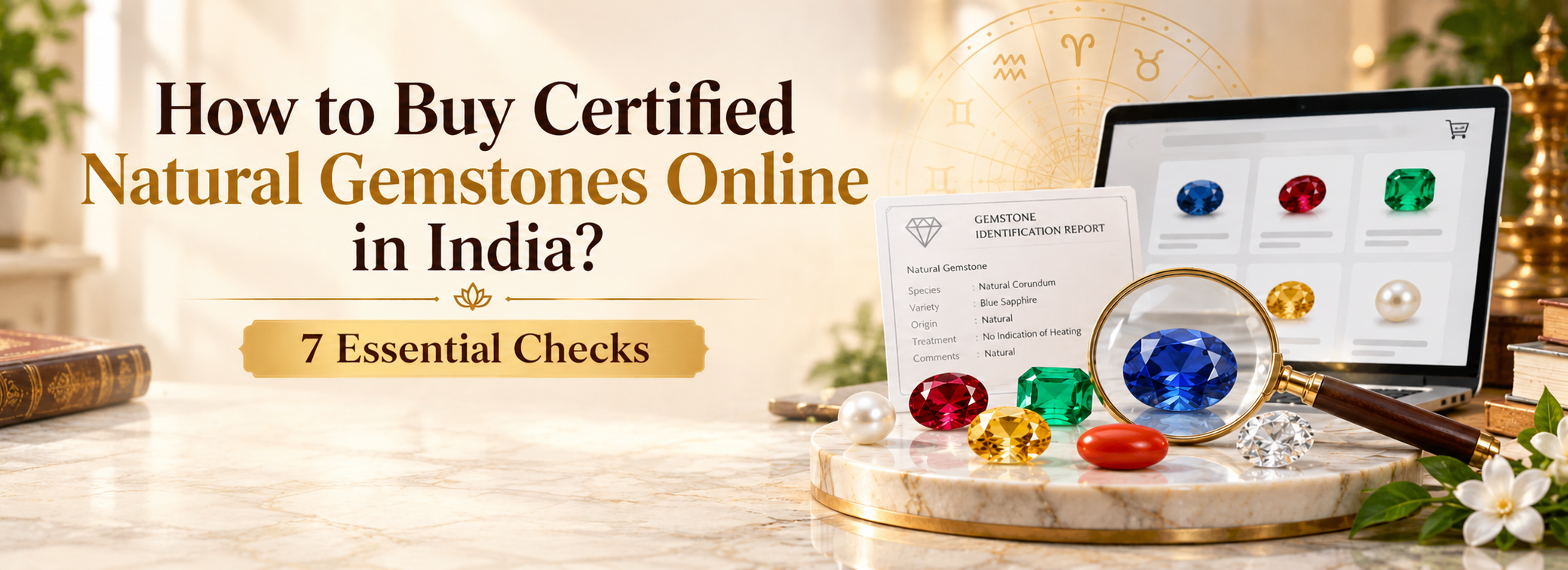
Quick Answer Buying a Certified Natural Gemstone online in India requires mor...
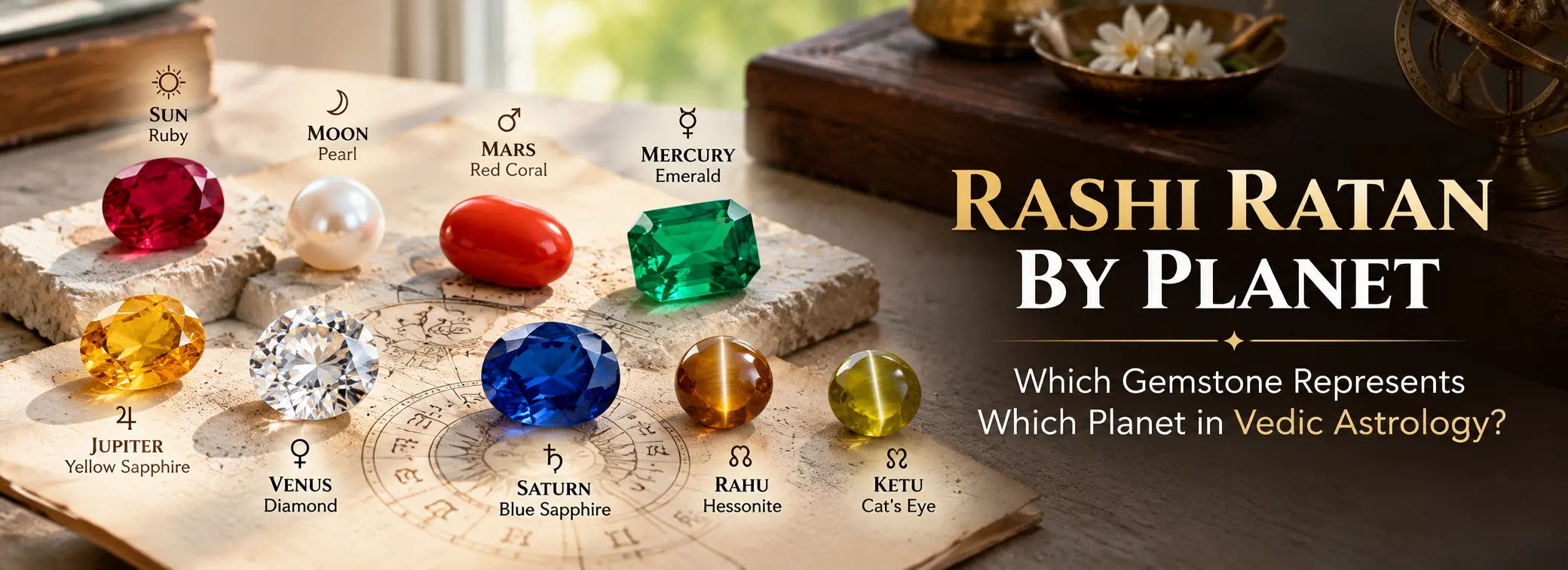
The traditional Rashi Ratan by planet, or Navagraha gemstones, list connects the...
Buying a gemstone in Jaipur can be confusing, especially when similar looking st...

Buying a Rashi Ratan online gives you plenty of choice, but there is one obvious...
Discover our handcrafted silver treasures and add something beautiful.
Explore Collections